
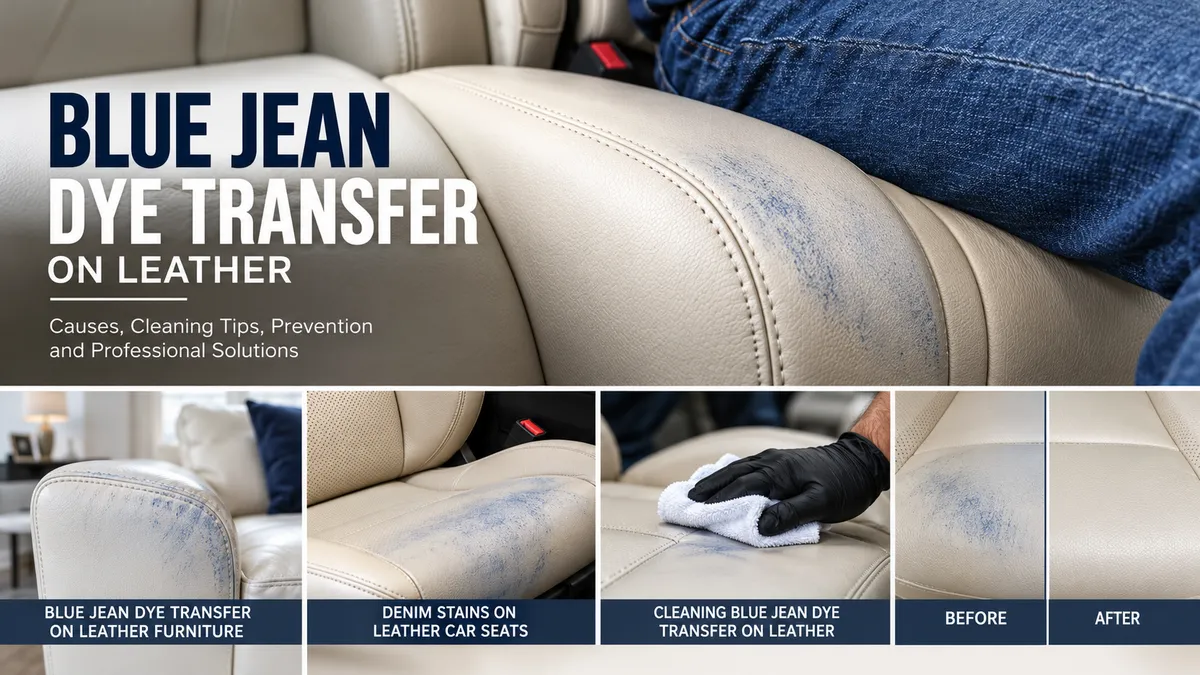
7 Proven Tips for Blue Jean Dye Transfer on Leather
Blue jean dye transfer on leather can leave noticeable blue or gray stains on your favorite furniture, car seats, and leather accessories. If you have ever noticed discoloration on a white leather couch or beige car seat after wearing dark denim jeans, you may be dealing with dye transfer.
Fortunately, some denim stains can be removed when addressed early and treated correctly. However, improper cleaning techniques may damage the leather's protective finish and make the problem worse.
In this guide, we explain what causes blue jean dye transfer on leather, seven practical ways to manage and prevent it, and when professional leather restoration may be the better solution.
What Causes Blue Jean Dye Transfer on Leather?
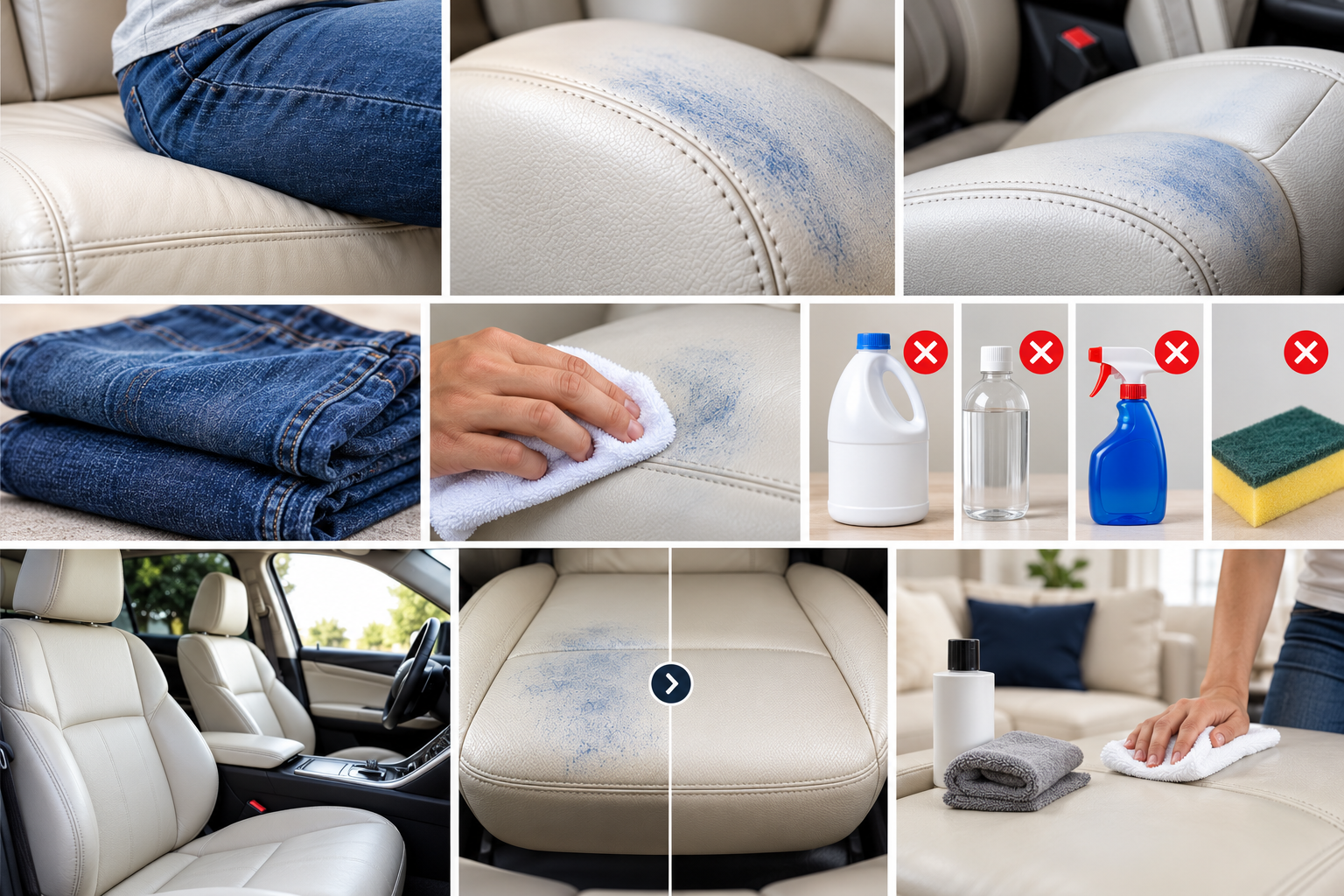
Blue jean dye transfer on leather occurs when pigments from denim clothing rub against leather surfaces, leaving unwanted discoloration.
Dark blue jeans, especially new or heavily dyed denim, can release excess indigo dye through repeated contact and friction.
Several factors contribute to this problem:
Dark denim clothing: New jeans may contain excess dye that transfers during normal wear.
Friction and movement: Sitting, shifting, and sliding across leather surfaces can transfer color.
Moisture and perspiration: Damp denim can increase the likelihood of dye transfer.
Light-colored leather: White, cream, and beige leather make blue stains more visible.
Repeated exposure: Daily contact with denim can gradually create stubborn discoloration.
Leather furniture and vehicle upholstery are particularly vulnerable because they experience frequent contact with clothing.
Understanding these causes helps you choose the right cleaning and prevention methods.
7 Proven Tips for Blue Jean Dye Transfer on Leather
1. Address Blue Jean Dye Transfer on Leather Immediately
The sooner you notice denim discoloration, the better your chances of removing it without damaging the surface.
Fresh dye transfer may remain near the protective coating of finished leather. Over time, however, transferred pigments can become more difficult to remove.
When you discover a blue stain:
Stop further contact with the denim.
Inspect the affected leather surface.
Check the manufacturer's cleaning instructions.
Avoid rubbing the stain aggressively.
Use only cleaning methods approved for the leather type.
Important: Do not assume every blue stain can be removed with ordinary household cleaners. Some stains may require professional treatment.
2. Identify the Type of Leather Before Cleaning
Not all leather surfaces respond to cleaning products in the same way.
Before attempting to remove blue jean dye transfer on leather, determine whether the material is protected, aniline, semi-aniline, suede, or nubuck.
Protected or pigmented leather
This leather typically has a colored finish and protective coating. Many automotive seats and household leather furnishings use finished leather, which may be easier to maintain.
Aniline leather
Aniline leather has a more natural appearance and is generally more absorbent. Incorrect cleaning can cause permanent discoloration or watermarks.
Suede and nubuck
These materials have delicate, textured surfaces that require specialized care. Standard smooth-leather cleaning instructions should not be applied.
If you cannot identify the leather type, consult a professional before applying any cleaning solution.
3. Use a Leather-Safe Cleaner for Minor Dye Transfer
For compatible finished leather, a manufacturer-approved leather cleaner may help remove light surface discoloration.
Follow these steps:
Remove loose dust with a clean, soft microfiber cloth.
Test the approved leather cleaner on a hidden section.
Apply the cleaner to a soft cloth according to its instructions.
Gently wipe the affected area without aggressive scrubbing.
Remove any residue as directed by the product manufacturer.
Allow the leather to dry naturally.
Inspect the area after cleaning.
If the stain remains, avoid repeatedly applying stronger chemicals. Persistent blue jean dye transfer on leather may indicate that the dye has penetrated the protective finish.
4. Avoid Harsh Household Cleaning Products
One of the biggest mistakes homeowners make is using aggressive household chemicals to remove denim stains.
Products that may damage leather include:
Bleach and ammonia-based cleaners
Rubbing alcohol and acetone
Household stain removers
Abrasive sponges and scrubbing pads
Unapproved detergents and degreasers
Strong solvent-based cleaning products
These substances can strip protective coatings, remove color, or leave the leather dry and uneven.
Some professional restoration processes use specialized chemical treatments, but these require proper material assessment and controlled application.
For routine maintenance, follow the manufacturer's approved leather care instructions rather than experimenting with household stain-removal solutions.
5. Protect Light-Colored Leather From Denim Stains
Prevention is especially important for white, ivory, cream, and beige leather upholstery.
Because blue jean dye transfer on leather is more visible on light surfaces, reducing direct contact with heavily dyed clothing can help maintain the material's appearance.
Consider these preventive measures:
Wash new dark jeans according to their care label before wearing them.
Avoid sitting on light leather furniture while wearing damp denim.
Use a clean, colorfast protective cover when appropriate.
Clean frequently used seating surfaces according to the manufacturer's instructions.
Ask a leather care specialist whether a compatible protective treatment is appropriate.
A suitable leather protection product may help reduce future staining, but no treatment guarantees complete resistance to dye transfer.
6. Check Leather Car Seats and Furniture Regularly
Blue jean dye transfer on leather commonly develops in areas exposed to frequent contact.
For automotive interiors, inspect:
Driver and passenger seat cushions
Seat bolsters
Lower seat backs
Frequently used armrests
For residential furniture, examine:
Sofa seating cushions
Recliner seats
Armrests
Frequently occupied sections
Light-colored leather dining chairs
Regular inspection allows you to notice discoloration before it becomes more difficult to address.
When cleaning leather furniture or vehicle upholstery, avoid oversaturating the material. Excess moisture can create additional problems, particularly on absorbent leather.
7. Consider Professional Leather Restoration for Stubborn Stains
Not every case of blue jean dye transfer on leather can be resolved through basic cleaning.
When transferred dye penetrates the protective coating or becomes embedded in the finish, specialized treatment may be necessary.
Professional leather restoration may involve:
Evaluating the leather type and existing finish
Assessing the depth and severity of discoloration
Selecting a compatible dye-transfer treatment
Addressing damaged surface coatings
Performing color correction or refinishing when appropriate
Recommending suitable ongoing maintenance
The appropriate solution depends on the condition of the leather and the extent of the stain.
Professional assessment can help determine whether cleaning, refinishing, or another restoration method is appropriate.
Can Blue Jean Dye Transfer on Leather Be Removed Completely?
The answer depends on several factors, including the age of the stain, the leather finish, and the depth of dye penetration.
Condition | Possible Outcome |
|---|---|
Fresh, light surface staining | May respond to approved leather cleaning |
Repeated denim contact | May require specialized dye-transfer treatment |
Older, deeply embedded stains | May need professional restoration |
Damaged leather finish | May require color correction or refinishing |
Sensitive aniline or suede leather | Requires material-specific professional assessment |
There is no universal cleaning method that guarantees complete stain removal.
Attempting to force a stain out through excessive scrubbing or strong chemicals may cause more damage than the original discoloration.
How to Prevent Blue Jean Dye Transfer on Leather Furniture
Preventing denim dye transfer is generally easier than correcting deeply embedded stains.
Start by paying attention to the clothing that regularly comes into contact with your leather furniture.
New dark denim may transfer more dye than clothing that has already been washed and worn several times.
To reduce the risk:
Wash dark jeans according to the clothing manufacturer's recommendations.
Avoid prolonged contact between damp denim and light leather.
Keep leather seating clean using approved products.
Inspect high-contact areas for early signs of discoloration.
Follow the furniture manufacturer's maintenance instructions.
These simple habits can help preserve the appearance of leather furniture over time.
Blue Jean Dye Transfer on Leather Car Seats: What Should You Do?
Leather car seats are particularly susceptible to denim stains because drivers and passengers repeatedly slide across the same seating surfaces.
Light-colored automotive interiors may develop blue or gray patches along the seat cushions and side bolsters.
If you notice blue jean dye transfer on leather car seats, avoid immediately reaching for an all-purpose automotive cleaner.
Instead, check the vehicle manufacturer's upholstery care recommendations and use a compatible product only when appropriate.
If the stain does not respond to gentle, approved cleaning, a leather restoration specialist can evaluate whether the discoloration is limited to the surface or has affected the finish.
Early assessment may help prevent unnecessary damage from repeated cleaning attempts.
When Should You Contact a Leather Repair Professional?
Consider professional assistance when:
The blue stain remains after approved gentle cleaning.
The discoloration covers a large section of leather.
The leather surface has become sticky, rough, or faded.
Previous cleaning attempts have removed some of the original color.
The material is delicate or difficult to identify.
You want to preserve the appearance of valuable furniture or automotive upholstery.
At LeatherTech Repair, you can inquire about leather discoloration and restoration concerns and request guidance on the next appropriate step.
Visit LeatherTech Repair to learn more and explore available contact options.
Frequently Asked Questions About Blue Jean Dye Transfer on Leather
Can blue jean dye transfer on leather be permanent?
Yes. Denim dye can become difficult or impossible to remove through normal cleaning, particularly when it penetrates the leather finish. Professional refinishing may be necessary in some cases.
How do you remove blue jean stains from white leather?
First, identify the leather type and consult its care instructions. For compatible protected leather, a manufacturer-approved cleaner may help with fresh surface staining. Avoid harsh chemicals or aggressive scrubbing.
Why do dark jeans stain leather seats?
Dark jeans may release excess indigo dye through friction and contact. Moisture and repeated use can increase the likelihood of visible color transfer.
Does leather conditioner remove denim dye stains?
Leather conditioner is primarily intended for leather maintenance and is not necessarily designed to remove transferred denim dye. Use only products appropriate for the specific leather and stain.
Can professional leather repair restore denim-stained upholstery?
In some cases, yes. Depending on the condition of the leather, professional treatment may include stain removal, color correction, or refinishing. Complete restoration cannot be guaranteed without an assessment.
How can I stop jeans from staining my leather couch?
Wash new denim according to its care label, avoid contact with damp jeans, inspect upholstery regularly, and use suitable protective measures when recommended by the leather manufacturer.
Final Thoughts: Protect Your Leather From Denim Dye Transfer
Blue jean dye transfer on leather is a common concern for homeowners and vehicle owners, especially those with light-colored upholstery.
Although fresh discoloration may respond to suitable cleaning methods, older stains can require specialized treatment.
The most effective approach is to identify the leather type, address staining promptly, avoid damaging chemicals, and practice preventive maintenance.
If blue jean dye transfer on leather has caused persistent discoloration, consider seeking professional guidance before attempting stronger cleaning methods.
Need help with leather discoloration? Visit LeatherTech Repair to explore your options and inquire about leather repair or restoration.
Additional Leather Care Resources
For further guidance on denim dye transfer and leather maintenance, explore these resources:


